
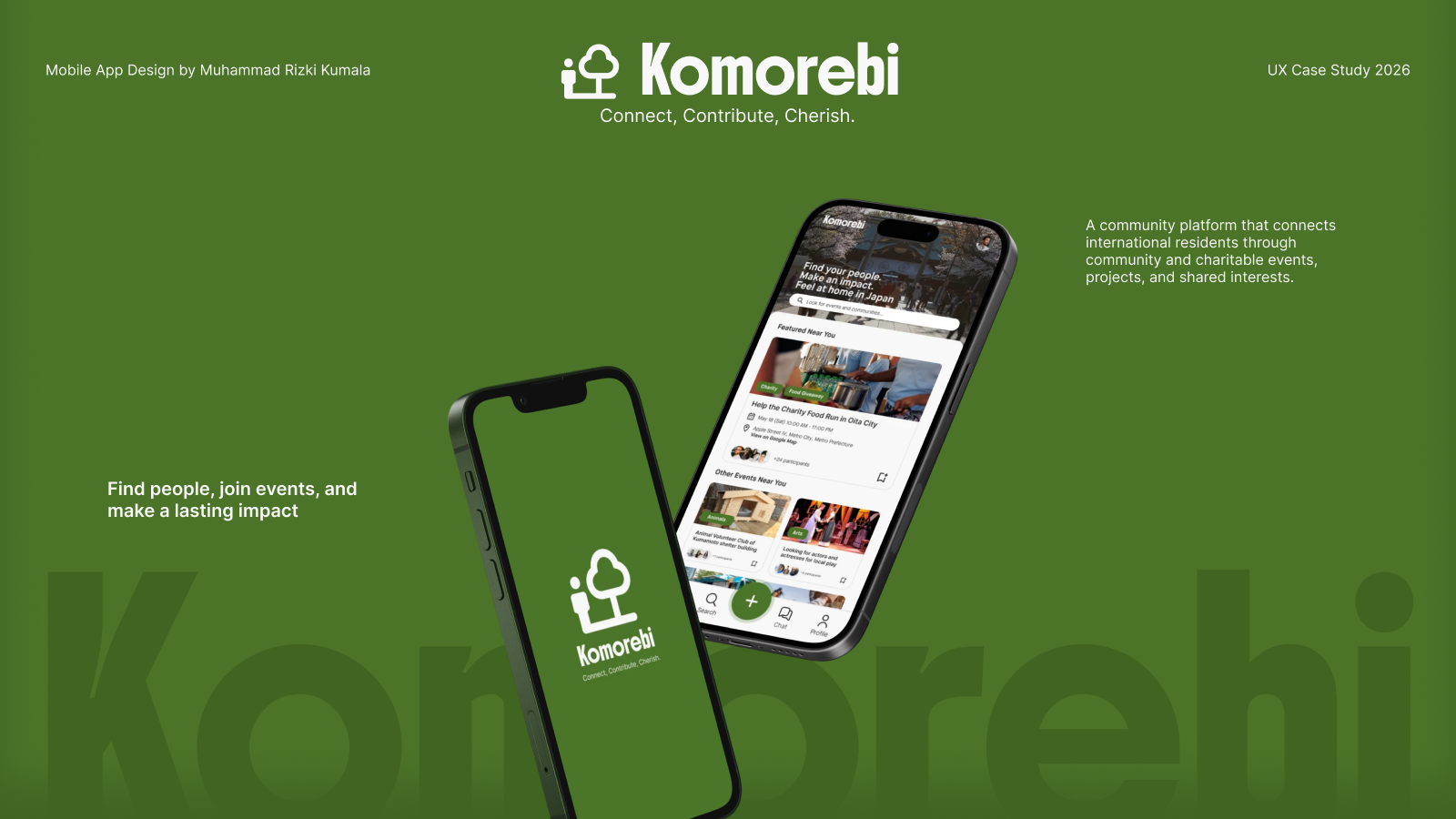
Komorebi
The final and penultimate UX case study for the Google UX Design Professional Certificate, I brought to life Komorebi; an all encompassing community event finder based on my personal experiences as a foreigner currently living in Japan.
Beginning in May 2026, Komorebi has been an independently led project, with ideation, user research, competitive analysis, wireframing, prototyping, and visual design all conducted by myself. The design continues to evolve through iteration and ongoing refinement, reflecting a commitment to creating a thoughtful and inclusive user experience.
Background
As stated this project is the comprehensive result of my time in Google's Professional UX course, and serves as the final result of not only my introduction into the world of UX studies, but also to my time here in living in Japan. These experiences shaped my understanding of how difficult it can be to discover local communities, volunteer opportunities, and meaningful connections despite the abundance of them around us.
Studies have shown that loneliness is a significant concern among migrant communities in Japan, with cross-temporal meta-analysis found that levels of loneliness in Japan have increased over the past four decades, from 1983 to 2023. These findings emphasize the importance of creating more accessible pathways for people to participate in their communities and develop meaningful relationships. (Homma & Takase, 2026; Yamashita et al., 2025)
The results of both of these experiences led to my decision to make Komorebi, an event/meeting app designed by and for international residents here in Japan. By definition, Komorebi (木漏れ日) is a beautiful Japanese word that translates to "sunlight filtering through the leaves of trees". It describes the dancing patterns of dappled light and shadow created when the sun shines through a forest canopy.
.png)
Goals
Komorebi aims to:
- Reduce the barriers international residents face when discovering local communities and opportunities.
- Encourage meaningful connections between people through shared interests, hobbies, and cultural experiences.
- Promote social impact by providing a platform for volunteer initiatives and community-driven projects.
- Create an inclusive and accessible space where users can organize, discover, and participate in local events
Research
Problems Identified
- Community opportunities are fragmented across Facebook groups, LINE chats, university boards, and local websites.
- Discovering local events is time-consuming and often requires searching multiple platforms.
- International residents struggle to find communities that match their interests and values.
- Volunteer initiatives and community projects lack visibility compared to larger social events.
- Building meaningful local connections can be difficult, leading to feelings of isolation and disconnection.
- There is no centralized platform designed specifically for international residents seeking community engagement in Japan.
Research Findings
The research process began with analyzing existing community-based platforms and conducting a competitive analysis of similar systems. While applications such as Meetup provide a strong foundation for connecting users through shared interests and events, they often serve broad audiences and prioritize general social gatherings rather than fostering localized community impact and meaningful cultural integration.
These insights became the foundation of Komorebi's design direction, emphasizing accessibility, meaningful connections, and the ability for users to both discover and contribute to the communities around them.

User Persona

Journey Map
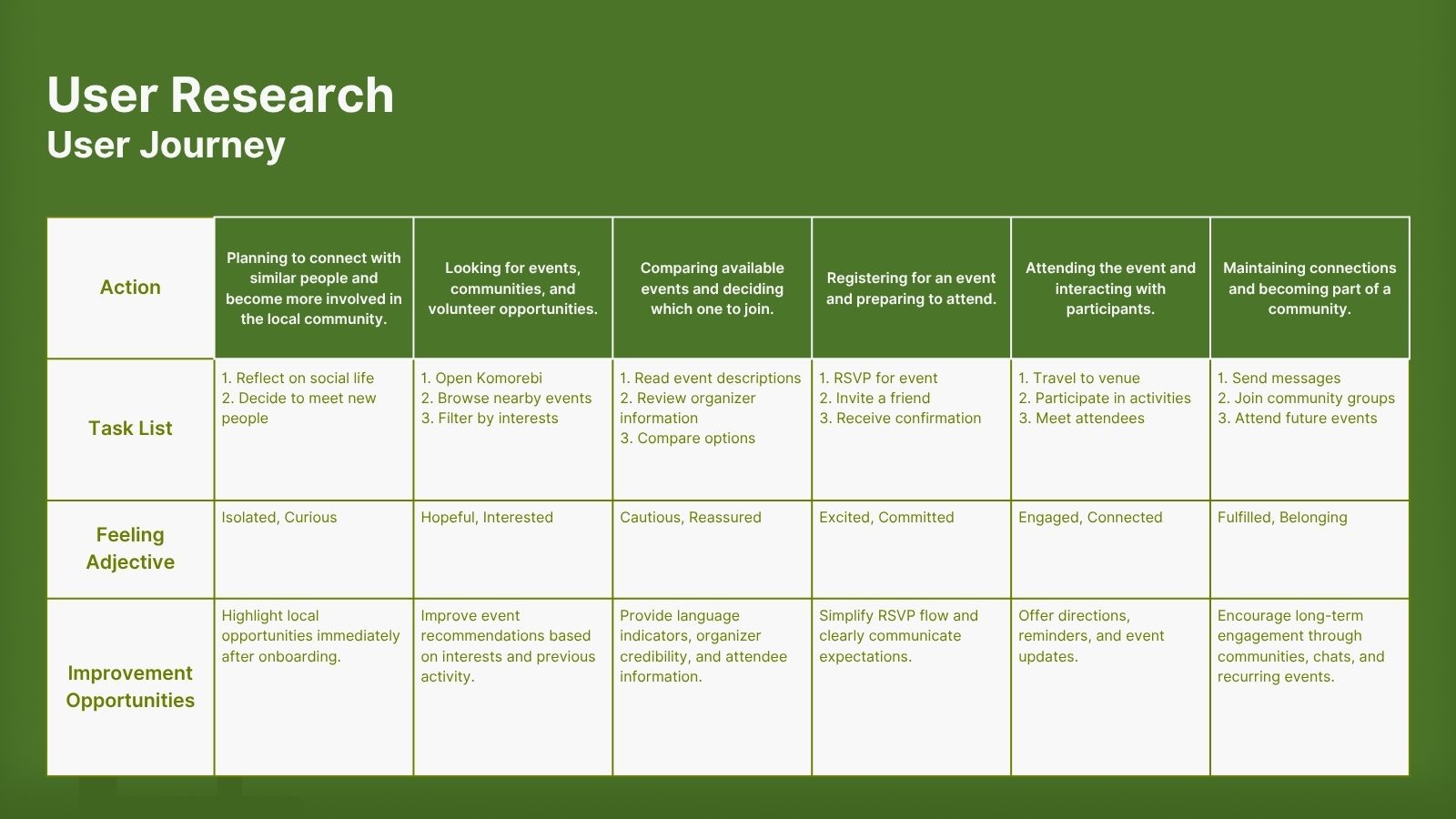
Designing the App
Competitive Analysis
Following up on the initial research, I gathered data of the designs, flow, aesthetics, and overall usability of similar competitors such as Meetup, VolunteerMatch, and Facebook Groups. While these platforms successfully connect people through events and communities, each focuses on a specific aspect of community engagement rather than providing a centralized experience for international residents.
Key findings of this research are that:
- Event discovery is often fragmented across multiple platforms.
- Volunteer opportunities are separated from social communities.
- Small organizers struggle to reach interested participants.
- Existing platforms rarely cater specifically to foreigners living in Japan.
Design Oportunities: Create a platform that combines event discovery, volunteer opportunities, and community building into a single experience designed for international residents.
Ideation and Wireframing
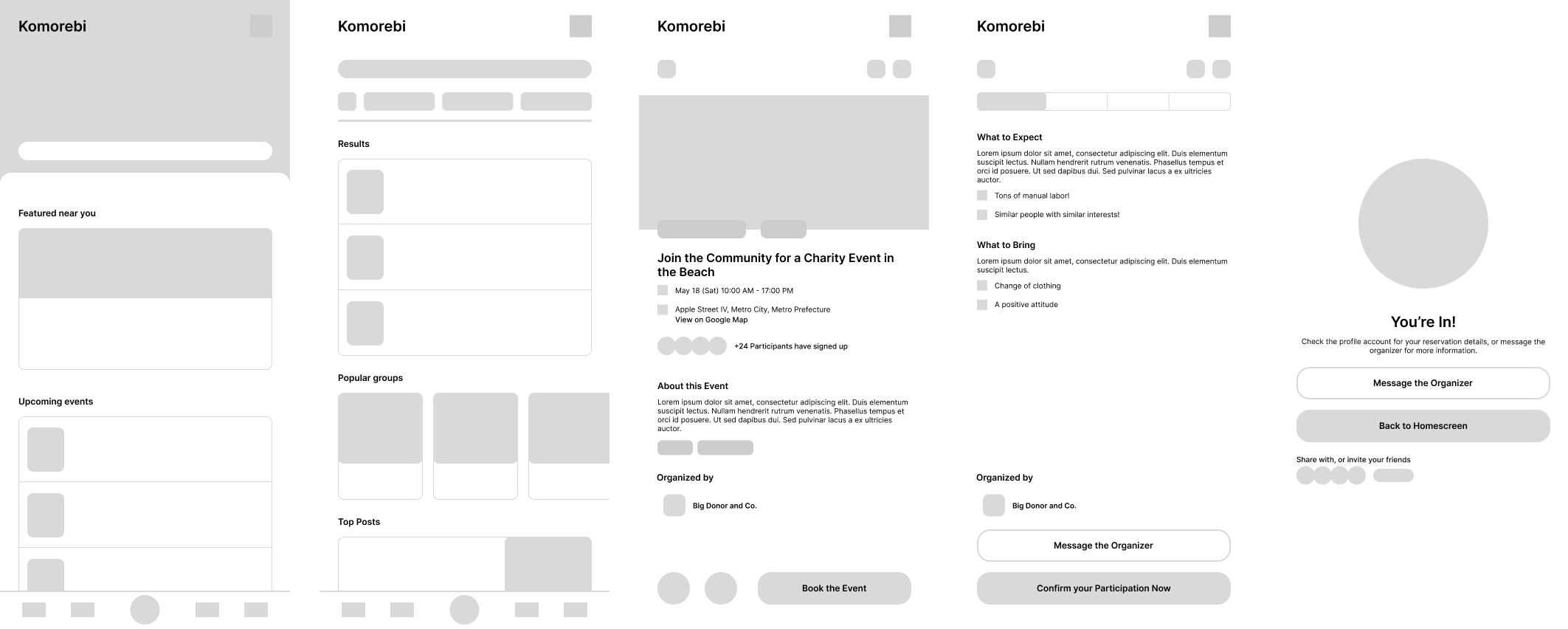
Using the insights gathered during research, I explored ways to simplify how users discover, join, and participate in local communities.
Throughout the process, I prioritized:
- Event discovery
- Search and filtering
- RSVP functionality
- Community messaging
- Event creation tools
Digital Wireframes
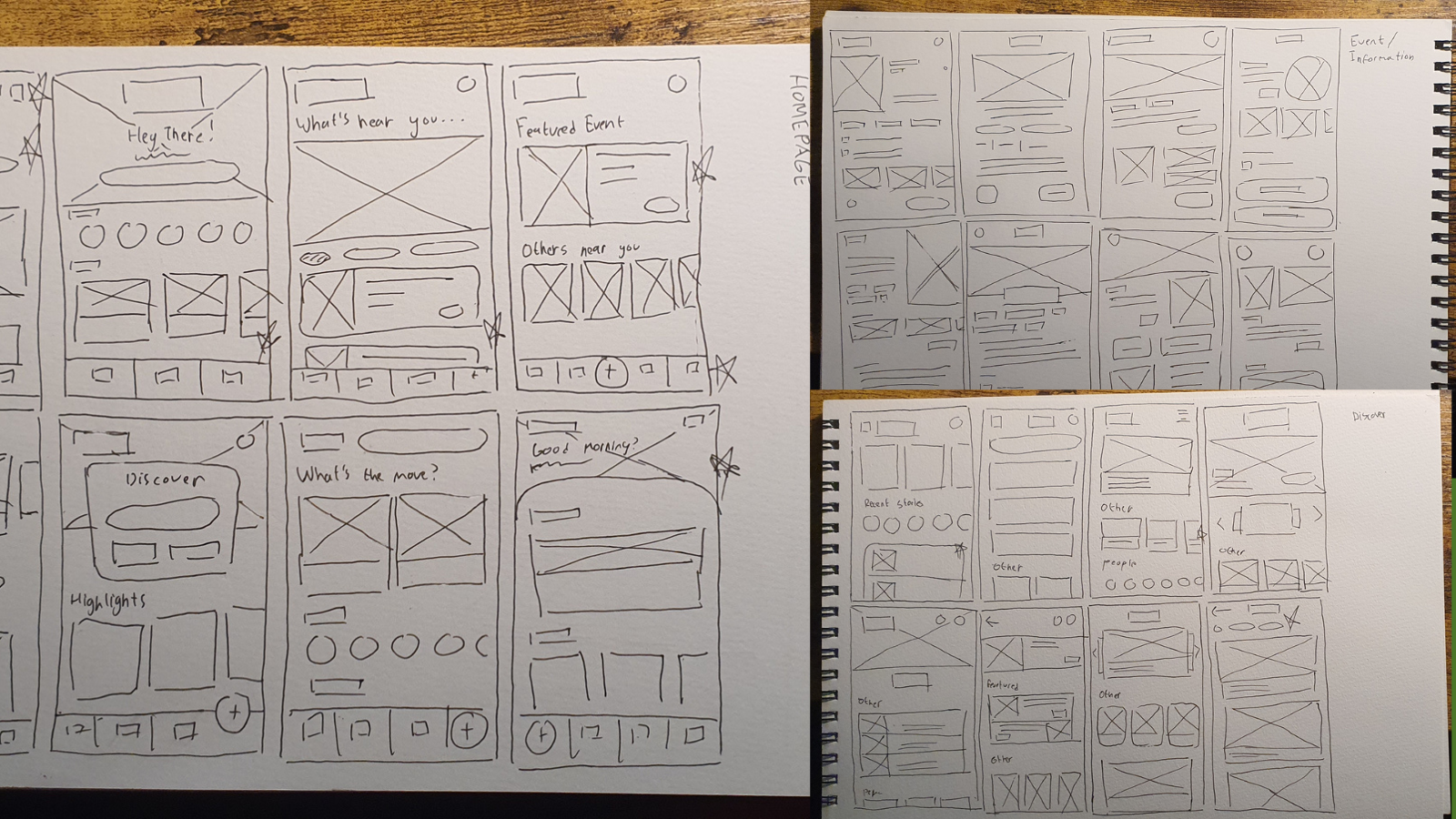
Early Mockup Screens
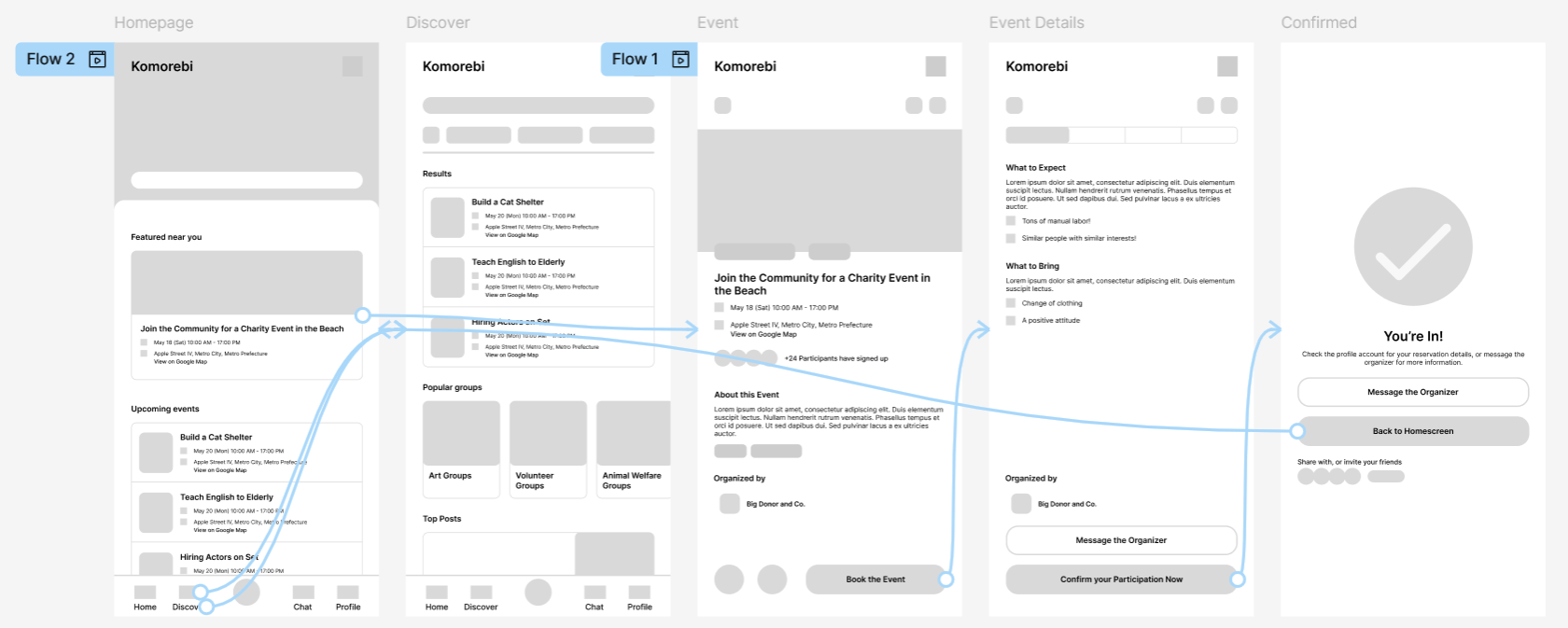
Lo-Fi Prototype and Testing
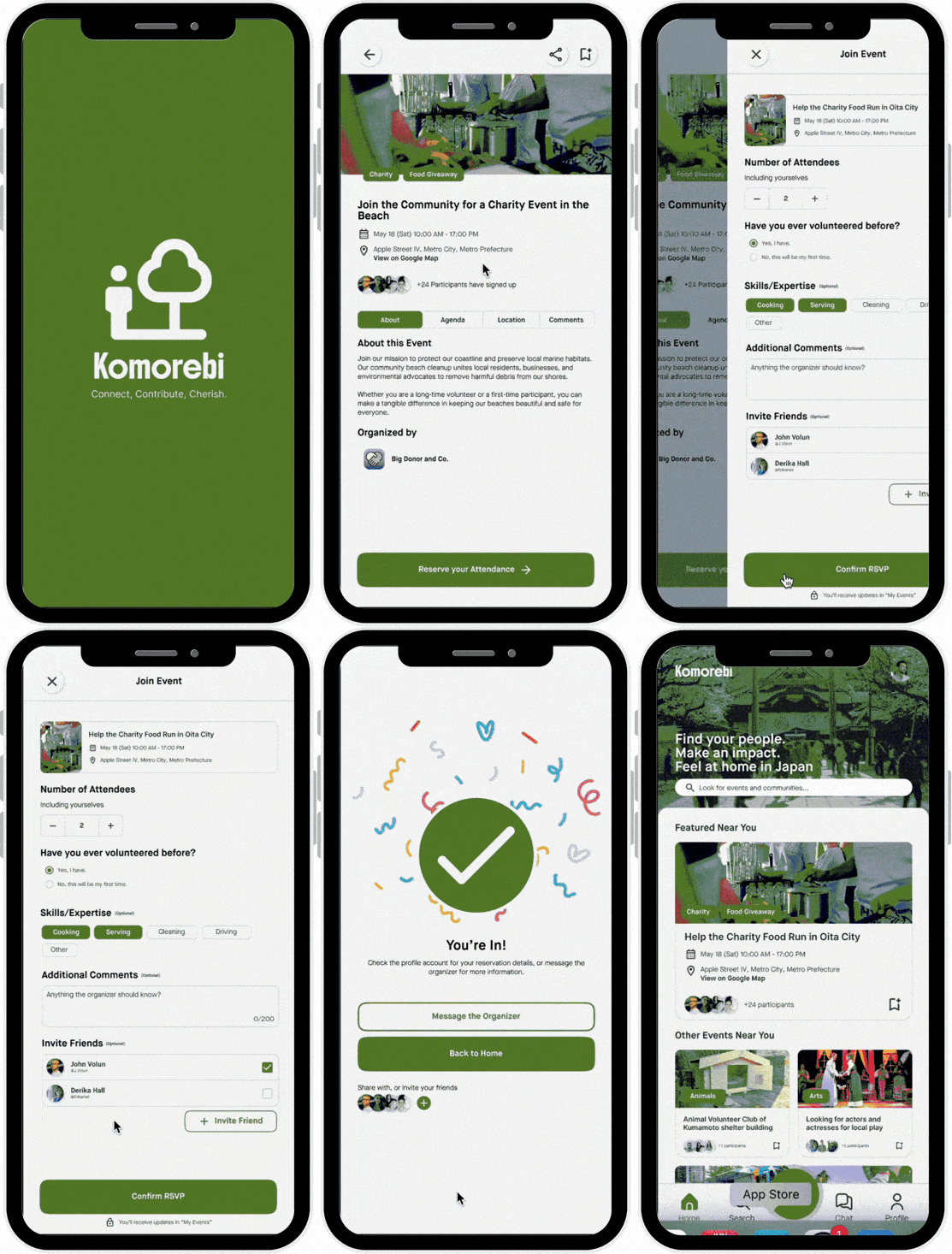
The prototype focused on the primary flow of discovering an event, viewing details, and successfully registering to attend. Five usability tests were conducted with participants matching the target audience, including university students currently living in Japan and individuals familiar with community-based applications.
Key findings from the study are:
- 4/5 participants successfully completed the RSVP flow without assistance.
- Participants easily understood the simple user flow.
- Several users expected more information or data to be inputted (E.g. Add more people to attendance).
- Some participants overlooked important event information when scanning event pages.
Live prototype can be found here.
The findings from the study has validated the overall user flow while highlighting several opportunities to improve discoverability, clarity, and user confidence before moving into high-fidelity mockups.
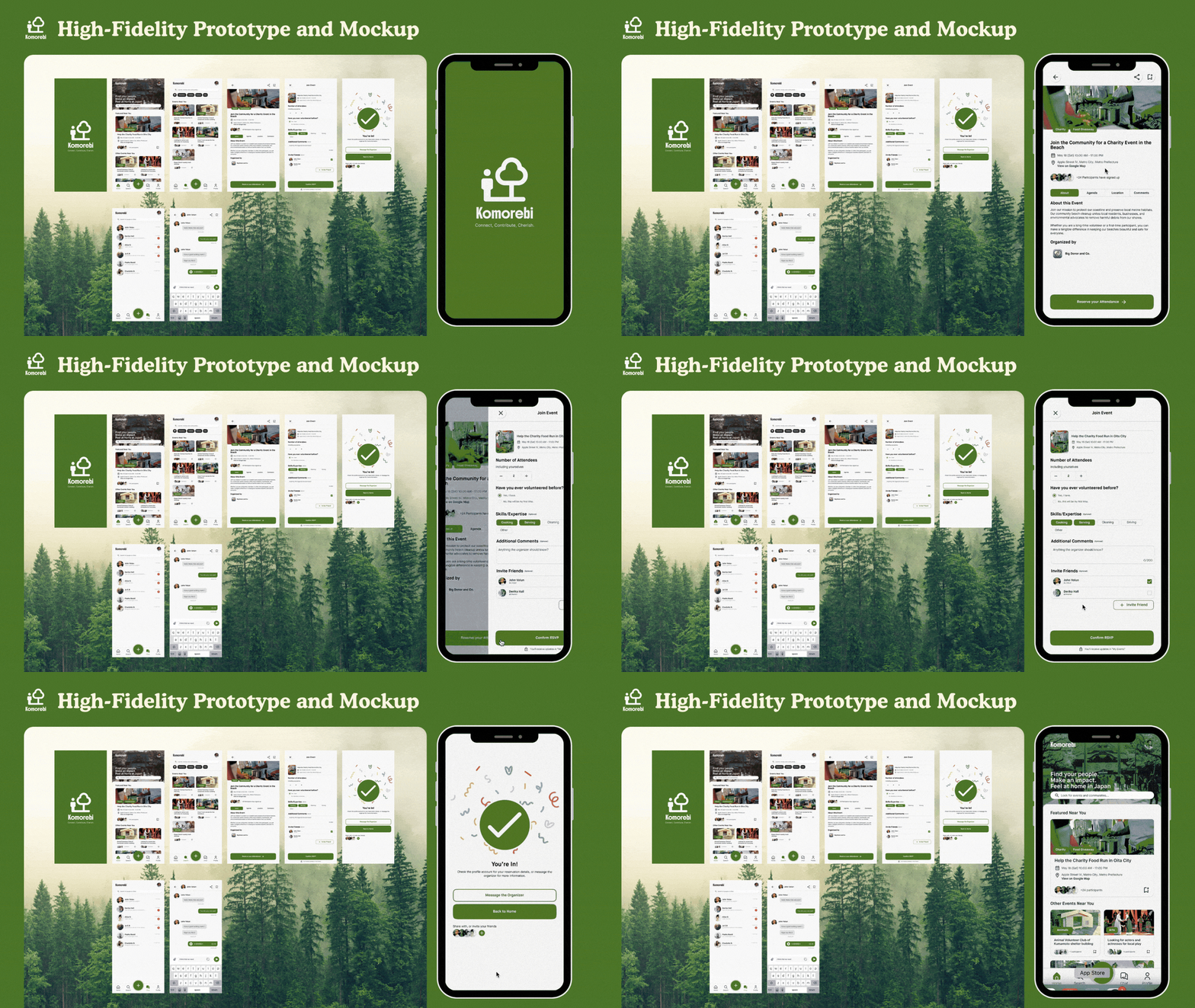
Mockup and Hi-Fi Prototype
The final design introduces a polished visual identity inspired by the concept of Komorebi (木漏れ日), emphasizing warmth, accessibility, and community through clean layouts, intuitive navigation, and a modern interface. These improvements resulted in a more seamless journey from discovering an event to becoming an active member of a community.
Live prototype can be found here.
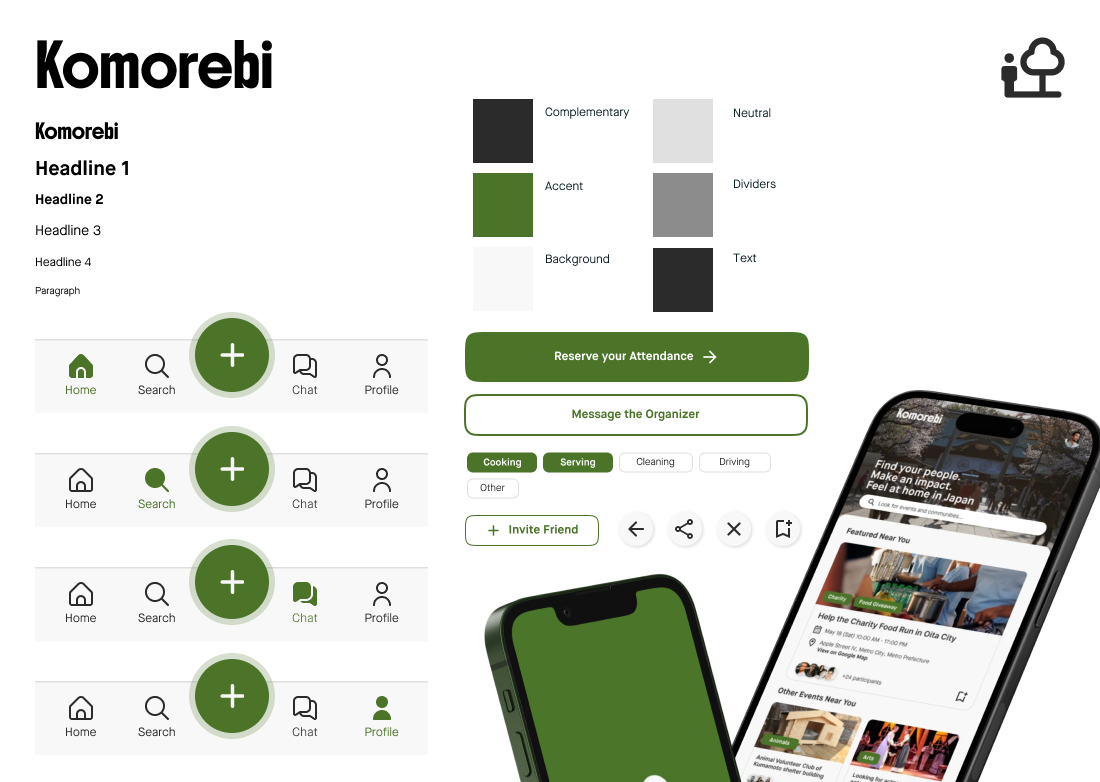
Final Look
Sticker Sheet and Details
The visual identity for the app was designed to feel modern, accessible, and welcoming while still maintaining the atmosphere expected from an art museum experience.
Final Design
As a platform, Komorebi provides international residents with a centralized space to find local events, volunteer opportunities, creative projects, and like-minded communities. The result is a streamlined experience that encourages users to engage more actively with the people and places around them.
.png)
Reflection
I loved my time in Japan.
Despite it's unlaunched status, Komorebi is still a proud representation of both the culmination of my journey through the Google UX Design Professional Certificate and my personal experiences living in Japan. Looking back, the lessons, memories, and experiences behind it are very real, and I hope Komorebi reflects that.


(1).jpg)